Showing posts with label The Bible. Show all posts

Saturday, August 2, 2014

Ultimate forgiveness


“Do not judge, or you too will be judged. For in the same way you judge others, you will be judged, and with the measure you use, it will be measured to you.
“Why do you look at the speck of sawdust in your brother’s eye and pay no attention to the plank in your own eye? How can you say to your brother, ‘Let me take the speck out of your eye,’ when all the time there is a plank in your own eye? You hypocrite, first take the plank out of your own eye, and then you will see clearly to remove the speck from your brother’s eye.
“Do not give dogs what is sacred; do not throw your pearls to pigs. If you do, they may trample them under their feet, and turn and tear you to pieces.
Matthew 7:1-6

This time I want to talk about ultimate forgiveness by which I mean forgiving yourself and forgiving others. If you're hurt especially deeply forgiving him or her may take some time - from few months until few years. How do I know when I have forgiven? When I simply have stopped giving any thought for the incident. Forgiving others is essential to be completely able to live on the present and see the blessings that God has granted to you in this life. It's also crucial so that you would be forgiven in the Judgment Day because your heavenly Father won't forgive you unless you've first forgiven those who have trespassed against you. But we do receive some mercy and forgiveness from God in the Holy Communion each Sunday through bread ("body of Christ") and wine ("blood of Christ"). As Christians we know that Jesus sacrificed himself so that our sins would be forgiven. 

I like to deal with things by writing. Once I've written them down I've released them. Once I've clicked "Publish" on Blogger I've let go and let God. That's my intention today because my life has changed so completely and positively that I see no reason looking back anymore. I want to concentrate on the present and future. I wake up to peace every morning, I'm right where I want to be in life. We got an apartment on September 2013 and I've given birth to my second son. My Theology and Pedagogy studies went alright in the Evangelical Institute. There's spiritual and financial abundance. I'm so grateful. I will start preparing for my second try to university on December 2014 though it will be a challenge as I am now a mother of two boys that depend on me all the time. Last time I practically passed the Finnish Language and Comparative Literature exam but my score just wasn't high enough to be admitted straight to the degree. This time I will be more prepared for I have committed myself for praying and fasting starting from the very first day that I will receive my Theology, Finnish Language and Literature study books and this will make six months. When it comes to my spiritual practice during the past few months I haven't been an active churcher but I have still prayed mornings and nights, listened to lots of Gospel music, written spiritual and Gospel poems, read spiritual books and discovered Wreath Of Christ. 

Returning to today's topic forgiveness I'm here to open my wounds and share them with you so that you can possibly relate and cure your own wounds with me. I recently read "Forgiveness: How to Forgive Everything for Everyone in 21 Days" by Iyanla Vanzant and next time I will continue the forgiveness theme by writing a review of the book and opening The Library Of Spiritual Growing. People that I find most difficult to forgive are my friends turned enemies, my ex, my mother and social and health care professionals. 

Why? Because I have been deceived by my friends and my ex. Because my mother is so possessive over my life that because of her I had to give up one of my greatest dreams and almost ever since my first son was born she has loved him like her own son which is of course good but she has taken it too far: My first son is a son of my ex and currently 3-years-old and mum forced me to let him live with my parents for 2 years because of the careless and abusive nature of my ex. In my opinion her should have never done this because first of all my ex has always shown affection towards his son swearing that his son should be hurt only over his dead body and I ended up being the only one who truly suffered in his presence. He never attacked his son, only me. Also now due to spending 2 years of his life with my parents my son imagines that his home is with them and prefers my parents in everything over myself, his legal guardian even now that after our break-up he has moved back home with me and my new Christian man. This has caused tension and jealousy between me and my mum and unfortunately jealousy and bitterness between me and my first son. Because of the attitudes of my parents and my first son I feel that I'm constantly punished because of the past with my ex. How can I get over when my parents don't get over? Even at the beginning of my relationship with my new Christian man my parents continued to have doubts and negativity and I had to scold them about living in the now and finally they let it go about my man but they continue to be possessive over my son. 
And finally I'm currently unforgiving and prejudiced over social and health care because they continue to be concerned over my children though they know that I'm with the most secure man that feeds us so much love that my life has turned to abundance of many sorts; I'm only still lacking something symbolic like status as a career woman and wife for I haven't completed my education yet and for we're planning marriage on December 2014 or summer 2015. To sum up, reading "Forgiveness" by Iyanla Vanzant brought me some peace of mind and I managed to forgive for the most people that have hurt me during my yet short life by writing her Forgiveness Journal but some issues such as the ones with my mum and social and health care are still fresh and so deep within my soul that I will be needing more listening to her Forgiveness CD of prayers and meditations to be healed for good. As prayer turned my life completely around in 2007 I highly believe in its healing power as well as meditation's. I will also do Iyanla Vanzant's forgiveness EFT or Tapping practice which is familiar to me already by Rhonda Jones's Christian meditation practice and I've found it helpful as well. My goal is to complete the 21 Days of Forgiveness until December 2014 because I feel that I'm only ready to get married and have a new name to symbolize this new life of mine when I have forgiven all the past hurt.     

Talking about presence and future I'm of course expecting to get married, have a job related to writing somehow, travel, graduate to a degree, publish and sell poetry books and... dreaming of becoming successful enough to afford or more likely deserve clothes on Vogue's pages :). I'm also dreaming of attending the concerts of my three biggest favorite artists and role models: Lauryn Hill (whose song "Forgive Them Father" is attached to this post) India.Arie and Jill Scott. By God's grace I already saw one big favorite of mine and a role model Alicia Keys with my Christian man making it the most touching and beautiful concert yet of my life in summer 2013 :).                         

Then Peter came to Jesus and asked, “Lord, how many times shall I forgive my brother or sister who sins against me? Up to seven times?”
Jesus answered, “I tell you, not seven times, but seventy-seven times.
“Therefore, the kingdom of heaven is like a king who wanted to settle accounts with his servants. As he began the settlement, a man who owed him ten thousand bags of gold was brought to him. Since he was not able to pay, the master ordered that he and his wife and his children and all that he had be sold to repay the debt.
“At this the servant fell on his knees before him. ‘Be patient with me,’ he begged, ‘and I will pay back everything.’ The servant’s master took pity on him, canceled the debt and let him go.
“But when that servant went out, he found one of his fellow servants who owed him a hundred silver coins. He grabbed him and began to choke him. ‘Pay back what you owe me!’ he demanded. “His fellow servant fell to his knees and begged him, ‘Be patient with me, and I will pay it back.’
“But he refused. Instead, he went off and had the man thrown into prison until he could pay the debt. When the other servants saw what had happened, they were outraged and went and told their master everything that had happened.
“Then the master called the servant in. ‘You wicked servant,’ he said, ‘I canceled all that debt of yours because you begged me to. Shouldn’t you have had mercy on your fellow servant just as I had on you?’ In anger his master handed him over to the jailers to be tortured, until he should pay back all he owed.
“This is how my heavenly Father will treat each of you unless you forgive your brother or sister from your heart.”
Matthew 18:21-35 

Lauryn Hill: Forgive Them Father 

Forgive us our trespasses as we forgive those
That trespass against us
Although them again we will
Never, never, never trust

Dem noh know weh dem do
Dig out yuh yei while dem sticking like glue
Fling, skin, grin while dem plotting fah you
True, ah who?

Forgive them father for
They know not what they do
Forgive them father for
They know not what they do
Beware the false motives of others
Be careful of those who pretend to be brothers
And you never suppose it's those who are closest to you, to you

They say all the right things to gain their position
Then use your kindness as their ammunition
To shoot you down in the name of ambition, they do, oh

Forgive them father for
They know not what they do
Forgive them father for
They know not what they do

Why every Indian wanna be the chief?
Feed a man 'til he's full and he still want beef
Give me grief, try to thief off my piece
Why for you to the increase, I must decrease?

If I treat you kindly does it mean that I'm weak?
You hear me speak and think I won't take it to the streets
I know enough cats that don't turn the other cheek
But I try to keep it civilized like Menelik

And other African czars observing stars with war scars
Get yours in this capitalistic system
So many caught or got bought you can't list them
How you gonna idolize the missin'?

To survive is to stay alive in the face of opposition
Even when they comin' gunnin' I stand position
L's known the mission since conception
Let's free the people from deception
If you lookin' for the answers then you gotta ask the questions

And when I let go, my voice echoes through the ghetto
Sick of men trying to pull strings like Geppetto
Why black people always be the ones to settle
March through these streets like Soweto
Like Cain and Abel, Caesar and Brutus
Jesus and Judas, back stabbers do this

Forgive them father for
They know not what they do
Forgive them father for
They know not what they do


It took me a little while to discover
Wolves in sheep coats who pretend to be lovers
Men who lack conscience will even lie to themselves, to themselves

A friend once said and I found to be true
That, "Everyday people, they lie to God too
So what makes you think that they won't lie to you"

Forgive them father for
They know not what they do
Forgive them father for
They know not what they do
Forgive them, forgive them
Gwan like dem love while dem rip yuh to shreds
Trample pon yuh heart and lef yuh fi dead
Dem a yuh fren who yuh depen pon from way back when
But if yuh gi dem yuh back den yuh mus meet yuh end
Dem noh know wey dem do, dem noh know wey dem do
Dem no know, dem no know, dem no know
Dem no know, dem no know wey dem do




Friday, October 26, 2012

The Bible's takes on beauty and appearance

This subject has been on my mind for months, maybe for almost one year and I guess that I've handled this subject already more or less but this time I'll bring you on some of my new thoughts and inspirations about beauty standards. But why am I bringing this on right now? Because for a while ago I visited Bloggers and there was a really fruitful conversation about secular beauty standards going on. I don't know whether the starter of the conversation was a male or female but surprisingly the nick referred to more male than female in my associations. Anyway, OK, let's say his concern was that he called himself fat and he felt there's a boundary between him and other people because of that and he felt that he isn't accepted because of his shape. I want to note that people gave him mostly some really beautiful and wise responses and the key idea of these responses seemed to be "Beauty is in the eye of the beholder". They also said that it matters the most what you think of yourself and when you will learn to love yourself the way you are, you'll be loved in return. But one sentence really touched me because I truly agree:" Even the slim are lonely." They also said that beauty comes from the inside and your inner beauty is reflected on the outside. "Beauty is always found from within." True friends accept you the way you are they also said. From the other hand they also said that he should take more care of his health, maybe to eat healthier and do some exercise. I think that everybody who responded to this conversation were right in their own way.

The reason why this conversation even exists is that media seems to give us a narrow-minded idea about ideal beauty which is that women is ought to be slim and men is ought to be muscley. Or from my point of view this at least used to be ideal beauty about 10 years ago. Once (and not even for so long time ago) I was being dumped by a spiritual guy with creative aspirations for not having big breasts enough or curvier body enough but he was satisfied with my inner beauty. In my opinion this actually seems to be a growing trend: In TV programmes that I've seen ordinary men when being asked on ideal beauty the general of them answered "women's got to have chest" and I actually hear or read more and more men saying that curvy women like Beyoncé and Kim Kardashian are considered sexy. Wow, when I was 11-years-old guys criticized me almost straight to my face for not being beautiful enough because "I was chubby". Well, insecure that I was already then, I dietted for one year - in puberty! And now I'm so mesmerized for hearing that I'm not good enough for being slim?! When I was 11-years-old I even had short hair and I wore glasses until I turned 16. Not standard beauty, eh (or so it seemed to me)? Though I had reached a slim fit and long hair until secondary school I suffered from braces and glasses but by the year 2007 I got them both away and so I had reached the way that I actually look even on this day, now wearing contact lenses.

Actually, to be honest, I've been lately getting really confused about what's the ideal beauty of today. There's no denying that media is still full of those mainly slim women with good-looking abs starting from music videos to the covers of magazines. My current shape is something in between these extremities of curvy and being slim with good-looking abs: I haven't heard anybody calling me fat for about 10 years, so I have to be one of the slimmest kind but without good-looking abs. Well, in my opinion I'm healthy shape for being an average type but I've been asking myself for months, Which way should I go from here? Should I pursue more curves or should I be after good-looking abs? According to media my average type doesn't seem to be sexy. Well, due to my experiences in puberty I'd rather be after good-looking abs or just stay the way I am. But the question is burning inside me, is my average type ever considered beautiful? You see from what I've written in this post that for years I've seen quite a huge effort for improving my looks with natural procedure, without surgery. I'm not even that type of girl who's into make-up but I might use lip gloss at times.
I actually recently started to put a bit more effort to exercise too which has been my weakness for years. I actually already started yoga in 2009 and I had a pretty long break from it until returning to it again. I think yoga is the only exercise that I truly love and that genuinely makes me happy. I've also started to do abdominal workout on a daily basis and tried some dance/aerobic which inspires me but can't beat yoga. As I already pointed out in my previous post the truth is that there truly are moments when I'm feeling myself beautiful or sexy in my own skin, especially when I do yoga. So you would ask me, what's my problem then?

I actually read through my self-analysis in this post and my point seems to be: Is it worth losing your natural self for the standards of others (meaning the secular beauty standards) IF you after all are truly happy with what you are? Well, my answer is NO without any hesitation. OK, now I'm once again going to surprise some of my friends who have known me for long time: If I'm truly honest with myself and close my ears from the standards I wouldn't necessarily change much of anything in my looks, especially not my shape because I consider it being healthy. I also wouldn't necessarily dye my hair - I've never dyed my entire hair but 10 years ago I tried small amounts of red and blonde (not together though!). Anyway, been there done that. If I'm happy with my God-given features so be it. There's no use for changing yourself for people who genuinely don't love you because God, your true friends and your true family have already accepted you. 


But to avoid any misunderstanding I'll highlight: There's nothing wrong with dying your hair, following trends and fashion and mainstream and exercising if you ask yourself:" Is this truly me, am I being real?" and your answer is YES. I'm only saying that there's no use of changing yourself for others but if you consider yourself a brave style chameleon then it's part of who you are and nobody should have any rights to disrespect that. This may work for you but it doesn't work for me and it's all beautiful :).  


The best advice that I would give for anyone or the best that I've gotten is:" Stand behind your words." Yes, it usually means that your deeds must equal to your words but I'm seeing this phrase deeper than that: You could include to this also being true to yourself in the way that I've described in this post because if you're trying to be something that you are not that's not standing behind your words, right? All this blog represents being true to oneself because I'm always outspoken and want to encourage my readers to follow your path, whatever it is as long as you're true to yourself. It's all part of your gift and purpose provided by God. YOU are the gift. 

The Bible and beauty 

"I praise you because I am fearfully and wonderfully made; your works are wonderful, I know that full well." Psalm 139:14 

The idea behind this Scripture is the same as I had in my previous post: God created human as His image. We are His masterpieces and made unique and different on purpose: We don't have to fit in any standards because we already are the standard! God created only biological twins to fit in the same standard but made it surreal and impossible for the other ones. Let's embrace our different genders, ethnic backgrounds, talents, beliefs, dreams, bodyshapes, wealth and health - This all is part of the magnificent plan. 

"But the LORD said to Samuel, "Do not consider his appearance or his height, for I have rejected him. The LORD does not look at the things man looks at. Man looks at the outward appearance, but the LORD looks at the heart." 1 Samuel 16:7 

The world focuses on what people look like on the outside. God focuses on what people look like on the inside. There's nothing wrong with wanting to look pretty and seeing effort to your outfit but as I said in my previous post: God wants us to be and do everything in balance so we shouldn't overdo our efforts towards inner or outer beauty. Both in moderation are good to have.
Now that I'm saying this in my opinion plastic surgery is overdoing your effort over outer appearance in 90 % of the cases. I mean by this that I accept it in cases where your facial features are turned so shapeless that we can't say that you have eyes, lips or nose. I believe that it's part of our human value and rights to have a face. I wouldn't encourage an ordinary healthy person to go and do plastic surgery and I also don't accept plastic surgery done for Down syndrome patients because they do have distinctive facial features.     


"Charm is deceptive, and beauty is fleeting; but a woman who fears the LORD is to be praised." Proverbs 31:3

Beauty fades with age, so if you are more concerned with your outer appearance, you will be unhappy when the wrinkles come and the number on the scales goes up. God wants us to "fear" Him, which means that we should put Him before any other standards and it doesn't matter to Him that we're getting old: He will still see us beautiful when we continue to reach for Him. 


"Your beauty should not come from outward adornment, such as braided hair and the wearing of gold jewelry and fine clothes. Instead, it should be that of your inner self, the unfading beauty of a gentle and quiet spirit, which is of great worth in God's sight." 1 Peter 3:3-4

This doesn't mean that it would be reprehensible to put effort on your outfit but God would rather see us putting effort on inner beauty which will probably last longer or at least He appreciates it more. I'm saying probably because people do can change in time on the inside and on the outside. 

"Physical exercise has some value, but spiritual exercise is much more important, for it promises a reward in both this life and the next." 1 Timothy 4:8 

Exercising and staying in shape is a good thing but God expects us to stay in shape spiritually by reading our Bibles, praying and going to church on a regular basis. In other words, there will be plenty of people who put their time and effort into staying in shape but who are out of shape spiritually. Our heart and soul matter to God more than anything.  

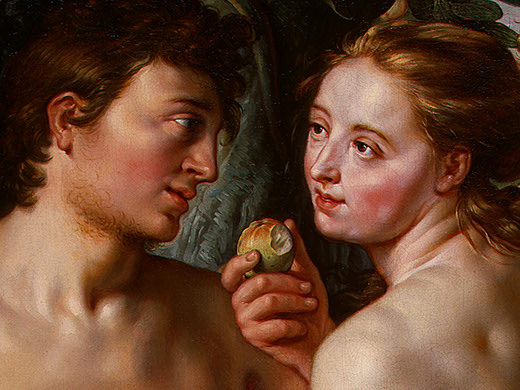
The mysterious woman in this picture is The Queen of Sheba. I chose her because I consider her being a Biblical beauty icon because her legendary beauty is highlighted so much in the Scripture. Also Queen Esther is one of the Bible's beauty icons. But actually if we should choose the most crucial Biblical beauty icon I would name it Mary Mother Of Jesus without any hesitation because as we see the Bible highlights high moral values, justice and inner beauty more than anything else and I think that the Biblical beauty ideals are crystallized the best in Mary. She's been described as humble and diligent putting herself before others.

Bliss is also beauty: when you're happy and smiling and you have a positive outlook on life it becomes easier to appreciate your own beauty and see beauty and goodness in others and around you as well. 


I'm going to make a surprising point: Though the Bible highlights inner beauty I just realized that the entire Song Of Solomon might be the most superficial book of the Bible most of its chapters praising outer appearance as we know and if there's to believe in the lore, the woman praised is The Queen Of Sheba. Having knowledge of both the Bible and Quran I know that both books have similar concepts on outer beauty and appearance because they were both written in Middle East. Knowing the context and era during which both of these holy books were written, they seem to highlight brown eyes, dark skin and thick black hair and as I interpret both books - also a curvy shape as beauty ideals. This is of course obvious because women living in Middle East generally look like this. I also want to highlight the beauty concept of Antiquity because the Bible was written in this era: Against our modern ideal of feminine beauty they actually thought the fatter, the better! They considered slim women like me ill and unsexy! But the ideal beauty concept on men hasn't changed since Antiquity: men are still encouraged to be muscley.

 I'm making a conclusion: The Bible lets me understand that your looks do matter but it would be a much, much bigger loss if your heart and soul were ugly.


Beauty secrets from the Antiquity!

      Oils

Oils used in Biblical beauty treatments included myrrh which was given to baby Jesus by The Three Wise Men and later used to anoint his dead body. Esther received a six-month myrrh oil beauty treatment in preparation of her marriage to King Ahasuerus (Esther 2:12). Myrrh moisturizes and heals the skin. Myrrh and other oils, such as cassis oil and frankincense, were also used as perfume at that time. Olive oil was another ancient beauty treatment used for its moisturizing and anti-aging properties:
Woman of Valor teaches how you can make your own Biblical fragrant olive oil treatment: Place a brown glass bottle with cold pressed olive or almond oil, full with herbs on the heater for a period of time. Or heat the bottle with oil and herbs placing the bottle in a pan with hot water for some time or just by placing it in the hot sun. Use this infused oil immediately after showering on your wet skin to make sure the oil absorbs the skin completely. Your skin will not feel oily after using the oil like this.

Nuts

Nuts are mentioned in the Bible for internal and external beauty uses. The staff of Moses' brother Aaron bursts into blooms with ripe almonds in an Old Testament story. Almonds are a source of vitamin E which protects the skin from wrinkles, photo damage and may improve skin texture. Pistachios were used for skin treatments and as food during Biblical times and are believed to have been part of the Hanging Gardens of Babylon, one of the Seven Wonders of the Ancient World. Pistachios contain carotenoids, a phytonutrient that helps protect the skin from sunlight-induced inflammation.

Fruit

Fruits mentioned in the Bible include the apricot, mentioned in Proverbs 25:11. Apricots are rich in carotene, a phytonutrient that protects the skin from UV damage. Pomegranates were brought back by spies of Moses to give to the hungry Israelites during the Exodus. They contain more antioxidants than red wine and green tea. Pomegranates contain polyphenols, powerful antioxidants that protect the skin from aging. Pomegranates are now used in skin creams, in addition to be eaten.

Dairy products

Milk baths were another beauty staple of the ancient world. Cleopatra, who ruled before the birth of Christ, was one of the first women on record to have utilized this treatment, though she used camel's milk. Milk contains vitamins D and A, which keep skin strong yet soft, as well as beta hydroxy acids, which slough dead skin from the body. Milk's ingredients also soothe and hydrate newly revealed skin. It may also be used as a hair treatment as it removes the small scales on hair follicles that make hair look dull.

Scents, cosmetics and other procedure

Biblical women may have also used scents such as saffron, myrrh, calamus, nard, cinnamon, henna. Women may have used also beet juice and pomegranate seed juice for blush and lip stain. They also surely had honey and oil massages for moist and soft skin after milk baths. 

Questions for readers: After reading my post do you think that Biblical view on beauty differs from the secular one or are they one and same? Also, what's the ideal beauty of today? Have beauty ideals changed in the past 10 years or have they remained the same? Feel free to comment below.      


Friday, August 31, 2012

Is sexuality our modern God?

"And God said, Let us make man in our image, after our likeness: and let them have dominion over the fish of the sea, and over the fowl of the air, and over the cattle, and over all the earth, and over every creeping thing that creepeth upon the earth. So God created man in his own image, in the image of God created he him; male and female created he them. And God blessed them, and God said unto them, Be fruitful, and multiply, and replenish the earth, and subdue it: and have dominion over the fish of the sea, and over the fowl of the air, and over every living thing that moveth upon the earth. And God said, Behold, I have given you every herb bearing seed, which is upon the face of all the earth, and every tree, in which is the fruit of a tree yielding seed; to you it shall be for meat. And to every beast of the earth, and to every fowl of the air, and to every thing that creepeth upon the earth, wherein there is life, I have given every green herb for meat: and it was so. 
And God saw every thing that he had made, and, behold, it was very good. And the evening and the morning were the sixth day." Genesis 1:26-31   

S-E-X. Sex. Yes, you heard me; I said that magic word. Whenever, wherever one says the word "sex" or expresses it in one way or another, miracles start to happen. Strong feelings will arise as well as view numbers whether it being a music video or movie in question. I actually know only two things in the world that cause tremendous passion, tremendous heat and they're sex and religion. And here I am taking a huge risk and talking about both of them combined! Why should it be a risk? Because they both tend to be taboos more or less but it of course depends on which part of the world you live in and what's your culture context. I dare to say that in Western world, in our Christian culture sex has become less and less a taboo. Of course churches have different views on it, some stricter and some more tolerant. I think that the Catholic church and Laestadian church have maybe the most cautious and judging views on expressing one's sexuality while I find my own Lutheran church having some of the most tolerant and laid-back ones. After all, I think that all Christian churches agree on one thing: At its finest and most beautiful state sex is an expression of true, deep love and belongs to marriage.
Well, I dare to disagree a little bit. I personally find there's nothing bad or sinful about having sex when you're engaged. Some may disagree in this modern sexually free world but I wouldn't have sex without a ring on my finger! OR, if you'd have sexual intentions on me prior engagement I'd at least expect you to propose. It's part of my Christian moral and dignity that I'm not into one night's stands and to me sex means commitment. If you aren't ready to engage with me, I'm not the one for you. I don't find my principle on having sex strict at all, I find it realistic and appropriate. I want to keep my self-respect. Let me share you one more scripture which isn't related to sexuality at all but it explains my views on Christianity and worship and it helps you understand why my points on sexuality are how they are:

"In this meaningless life of mine I have seen both of these: the righteous perishing in their righteousness, and the wicked living long in their wickedness. Do not be overrighteous, neither be overwise - why destroy yourself? Do not be overwicked, and do not be a fool - why die before your time? It is good to grasp the one and not to let go of the other. Whoever fears God will avoid all extremes. Wisdom makes one wise person more powerful than ten rulers in a city. Indeed, there is no one on earth who is righteous, no one who does what is right and never sins. Do not pay attention to every word people say, or you may hear your servant cursing you - for you know in your heart that many times you yourself have cursed others. All this I tested by wisdom and I said, "I am determined to be wise" - but this was beyond me. Whatever exists is far off and most profound - who can discover it? So I turned my mind to understand, to investigate and to search out wisdom and the scheme of things and to understand the stupidity of wickedness and the madness of folly." Ecclesiastes 7:15-25       

After this post there shouldn't be any misunderstandings left anymore about who I am as a Christian. This following passage from Ecclesiastes 7 explains my Christian lifestyle and it's my current favourite and I find this passage THE TRUTH. I interpret this passage like it's OK to gather for yourself some material goodies and it's OK to be rich as long as you won't become greedy and keep it all to yourself; Do enjoy your wealth but don't forget about the ones who are less fortunate. Also don't become too generous so you won't turn into martyrdom. This is actually my biggest life lesson as a Christian! So yes, I do allow pretty much pleasure for myself but I find it's crucial for your (mental) health. If you live more for others than yourself you'll suffer and get sick. Always listen to your heart first and what feels good for you :). Once you've reached bliss it's right time to share it for others too but if you haven't keep searching until you're ready. Part of my pleasure is that I shop but not until I drop! I also allow myself to eat sweets and ice cream at times but not so often that I'd get fat. In the very beginning of my Christianity 4 years ago I hardly allowed any pleasure for myself but now I've learned my lesson. You shouldn't take Christianity too seriously but also not too lightly as Ecclesiastes 7 says. Pleasure is part of life as well as pain but to learn to appreciate pleasure you have to feel the pain first. Now, back to another pleasure:


She:
"Let him kiss me with the kisses of his mouth - for your love is more delightful than wine. Pleasing is the fragrance of your perfumes; your name is like perfume poured out. No wonder the young women love you! Take me away with you - let us hurry! Let the king bring me into his chambers." Song of Songs 1:1-4 
He:
"How beautiful you are, my darling! Oh, how beautiful! Your eyes behind your veil are doves. Your hair is like a flock of goats descending from the hills of Gilead. Your teeth are like a flock of sheep just shorn, coming up from the washing. Each has its twin; not one of them is alone. Your lips are like a scarlet ribbon; your mouth is lovely. Your temples behind your veil are like the halves of a pomegranate. Your neck is like the tower of David, built with courses of stone; on it hang a thousand shields, all of them shields of warriors. Your breasts are like two fawns, like twin fawns of a gazelle that browse among the lilies. Until the day breaks and the shadows flee, I will go to the mountain of myrrh and to the hill of incense. You are altogether beautiful, my darling: there is no flaw in you." Song of Songs 4:1-7

The purpose of my post is to draw an end for the prejudice that Christianity would judge sex as something evil. Look how erotic were these passages of Song of Songs! Even the Genesis is fully sexual! I also already pointed out that sex isn't a taboo anymore in Christian countries. All you have to do is to look around you when you're hanging out and right when you want to listen to music or watch TV sex is right there. Sexuality is everywhere, it's in us; we can't run, we can't hide. All we should do is that we should embrace it and accept that that's how God meant it to be.
But since Antiquity, the Bible's "birth time", there have been also reprehensible expressions of sexuality coming up like prostitution and I believe that my readers agree with me. I also don't accept porn and stripper's occupation and poledancing as a hobby is somewhere on the limits of my disapproval because I relate it to stripper's occupation. To avoid any misunderstandings, I approve any other dance and I'm trying to learn to dance myself. There's also nothing reprehensible about model's job and doing lingerie and swimsuit/bikini photo shoots as long as you keep your clothes on and won't go to PlayBoy style! Nude modelling equals to porn. Incest, rape, molestation etc... A lot of bad expressions of sexuality have come out since our society has become overly sexed-up.
Also, there are for sure people in the world who think that everything should be allowed in love and sex. I do think myself that there's got to be laws and authorities and ethics and moral in order to keep this world in order and in order to secure our happiness. I find that my views are realistic on everything that I've written in my blog so far and even though I support tolerance very highly I don't think it can be good for us to tolerate and accept everything with 100 %. Then we wouldn't be talking about tolerance anymore, we would be talking about weakness and insecurity.

People's body image has been overly exaggerated in the media: If men aren't muscley and women aren't lean with big breasts and long hair we aren't sexy. If you aren't sexy or beautiful you are nothing. You can't be loved, you can't be wanted, you can't be successful in your endeavors and career goals. If you aren't sexy you end up being a lonely loser. That's what media is trying so hard to make us believe. But can this narrow-minded image of sexiness be the only answer? Aren't we sexy if we don't fulfill media's standards of ideal beauty? What if sexiness is a state of mind instead of state of body? The next things that I'm going to say will probably come as surprises for many people that know me: There truly are days and times when I feel myself sexy in my figure and in my opinion we Christian women have rights to feel so because I don't find that the Bible would judge sexuality and sexiness as hard as many people seem to believe. I feel myself sexy especially when I do yoga as in yoga you embrace your body the way it is and when you exceed yourself in yoga poses your self-esteem gets better. I should be glad that I don't suffer from obesity or an eating disorder. I'm just good and sexy enough in my own healthy average body shape that's often described being slim.

To close my subject I'll handle my title more closely: What do I exactly mean when I'm asking 'Is sexuality our modern God'? To me it feels like today's people worship sexuality instead of God. We worship media's sexy images on TV and magazines wanting so bad to be like them, they have become our highest secular examples. We use so much time and effort to get that media's body shape. Those people in the media are idols as they say: idol equals to an image of God. Yeah, the Bible says that all people are images of God but now when I'm talking about these media's idols I'm comparing them to the Bible's golden bull, false god. God created sex so rationally thinking sex can't equal to God. But if we think about creation and the way biosystem and nature work, isn't that sexual energy? God created sex and sex creates life, obviously. So when we have sex do we become gods, do we become creators? When God created human as His image did He mean sexuality is the image? That's one possibility and theologies constantly argue about this.

Oh and the most important thing: I'm pleased to inform you that my debut book The Rainbow of Tones will be published on October 2012 or if it delays you could expect it to be available on November. As you may already know it's a poem book that will also contain pop, rock and gospel lyrics. The subjects in my poems vary from sorrow to loneliness, self- and body image, fantasies and imagination, love, spirituality and multiculturalism and tolerance. My pop and rock lyrics deal with some similar subjects but in my pop lyrics I also comment on such social issues as poverty, racism, global warming, women's status worldwide and the conflict of 3 Book Religions.  


What's your comment on this subject? Is sexuality our modern God? Feel free to comment below :).       


Sunday, January 2, 2011

An Introduction to biblical food Part 2 of 3

Food in the New Testament

Food of the rich and poor

Patina zomoteganon (fish fillets with leek and coriander):

You can use any fish you like. Put the fish fillets in the pan and add oil, liquamen fish sauce, young wine boiled into whole and a bunch of leek and coriander. Boil them slowly and meanwhile mince pepper and lovage. Mince a bunch of oregano and mix it into the fish soup. Break two eggs, separate the yolks, whisk them and thicken the soup into a sauce by mixing the yolks little by little into the soup. Strew the pepper on and serve.

(Apicius, De Re Coquinaria, known as The Roman Cookbook)

My husband is poor and I'm an old woman. We have a daughter and son, this boy over here, and yet this kind girl, so five altogether. If three of us gets dinner food, then two others will have to share together a small piece of barley bread. We cry and we bawl when there's nothing to eat and we're getting pale of the lack of food. We live with these: beans, lupine, vegetables, swedes, pieces, tares, beech tree's nuts, onions of iris, grasshoppers, chickpeas, wild pears, and then with those treasures of my heart, god given to our motherland, namely with dried figs.

(Taken from a lost comedy of Alexis, remained in the writing of Athenaios called Deipnosofistai.)

The extracts above tell about the extremities of Roman food culture, the upper one being an example of food of the rich and lower one being an example of food of the poor. I was fortunate to find this translation of the cookbook of Apicius from the library. The cookbook is from the late Antique and it contains recipes even of ostrich and flamingo. When I started exploring this extraordinary book I found more and more strange dishes, usually made of expensive and rare ingredients. I believe that most of those ingredients used in the book aren't even available in the modern world, so I'll publish in my blog those few recipes that we might could try in 2011 with ingredients available in the grocery stores, fish fillets with leek and coriander being one of the good examples above. The book contains various recipes for whole meat and for very expensive big, fresh fish. So anyone truly couldn't "use whatever fish they liked" as the recipes advices. Also extremely expensive import spices are used in the recipes of Apicius, like pepper in here. The extract from the comedy of Alexis is from 300 BC, but the situation it describes was as usual still in the Roman Emperor era. The poor had to struggle in the limits of hunger, especially in the lack times they picked up their bread with emergency nutrition collected from nature - here at least by beech trees nuts, onions of iris and grasshoppers - and by plants that were usually used to feed animals, like lupine and tare.

The nutrition was based in grain, olive oil and wine in the Mediterranean countries by the Roman era. In Egypt and partly in Middle East sesame oil replaced olive oil. The most important grain sorts were wheat and barley. They grew beside easily baked bread wheat also more primitive grain sorts such as spelt, durum, emmer and single corn wheat which were prepared porridge and unleavened bread. In addition they ate also a lot of millet. After grain, olive oil and wine legumes came as the good number four, especially horse bean, chickpea and other peas.

The diet of the poor was mostly based on grain products and simple, cheap side dishes. Stews were prepared of peas and beans, soups and pastes were among these very important sources of protein though they were mostly had as small amounts beside bread and porridge. Also fish was an important source of protein but in the warm climate they couldn't store fresh fish or transport it very far away. That's why elsewhere than exactly on the coast fish was eaten mostly as fermentated sauces and pastes (garum, liquamen and allex in Latin). THey were prepared by letting fish rot and ferment in big jars in the sunshine for months. They might add olive oil, salt and spices into the sauces during the process. They were used depending on the way of preparation either as food's spice or dip sauce for bread. Most of the fish in Roman empire was eaten in this form and the market was wide. One of the producers of fish sauces was the shore town of The Sea of Galilee called Magdala, the home of Mary Magdalene. Huge fresh fish was so expensive that only the elite could afford it. In the interior the fresh fish of the rich was raised in fish ponds. The rich used many fish species that are expensive even today such as sturgeon, flounder, moray, tuna fish and eel but also many fish of sweet water. In the coast there was better enough fish for everyone, but the poor ones could usually afford only assorted small fish.


Grain, wine and oil was used by everyone but only the rich could afford fairly more expensive qualities. White, fine-grained wheat flour was most appreciated and most expensive and it got also baked and rised the best. But the poor used fairly dark and harshly grinded grain such as barley and the original sorts of wheat. There was olive oil of many qualities like nowadays. Virgin olive oil of the first crushing time was the best and most expensive. Olives were eaten in addition huge amounts cured in salt water and marinated. Likewise there was a wide quality range of wines from expensive volume wines to the worst wine watered for field slaves made of grape skins that were crushed empty and soaked in water. White wine was mostly appreciated by the Roman era and they kept sweet and short wines as the finest ones, maybe because of that sweetness and strength improved persistence. So in the Acts those who doubt speaking with tongues in Whitsun originating from being drunk, supposed the Disciples having been drunk precisely sweet wine - so not a little and ordinary wine with food but more delicious wine and much (Acts 2:13).

The most expensive spices were imported from India and they were luxury products. In the recipes of the rich they are used very much but the poor certainly never used them. They knew anyway a huge amount of herbs by the Roman era and they grew in the Mediterranean area so they were generally better available. The spectrum of spices was practically the same we know. Honey was mainly used as a sweetener. THey produced in Egypt and Middle East date paste and date syrup for the same purpose but using them became general also elsewhere in the empire. Cane sugar was imported from India and it was so expensive that it was used only as medicine.

Using meat was joined to wealth and social class. Even the poor ones could buy blood pudding, meatloaf and sausage from inns and street eateries. Sausages and minced meat were prepared from slaughter waste and meat of bad quality that without grinding would have been too tough for eating. Fowl's meat, especially dove, was the most cheap of whole meat and it was better food for ordinary people. Another fairly cheap whole meat sort was rabbit that could be farmed in small stead also in towns and nearby them. The red whole meat of bigger animals was in turn so expensive that practically only the upper class could have it. Also Roman army spent as an privileged group huge amounts of meat. For ordinary people red whole meat was a very rare treat of great sacrifice ceremonies. It was strongly connected to sacrifice cult and bigger feasts. Exactly because of this Paul had to ponder can a Christian participate in pagan sacrifice feast and eating the sacrifice meat when he knows that there really are no other gods. Obviously temptation to join was huge only because of rare meat eating.

Even though food is offered to idols, we know that none of the idols in this world are alive. After all, there is only one God. -- Not everyone knows these things. In fact many people have grown up with the belief that idols have life in them. So when they eat meat offered to idols, they are bothered by a weak conscience. -- You know all this, and so it doesn't bother you to eat in the temple of an idol. But suppose a person with a weak conscience sees you and decides to eat food that has been offered to idols. (1 Cor. 8:4, 7, 10.)

The outstandingly most important dairy product was cheese. Cows were kept especially as draught animals, so cow's milk was rare and not even very appreciated product. Sheep's and goat's milk were the most usual milk sorts. But using them for drinking was limited because the animals pastured in the summer time in high mountains, where transporting fresh milk home was impossible. That's why milk had to be cured cheese already in the mountains. By winter season there was less feed in the enclosures and milk production usually ran entirely dry. There were miscellaneous cheese from smoke cheese into fresh cheese which was usually spiced with herbs. Being caused by the small amount of cows they didn't use cream and butter at all as food ingredients in the Mediterranean circle. I suppose they still don't use in Middle East until this day, because I haven't seen the Kurds using them in any of those various meals that I've participated in.

Actual famines were rare by the Roman era if famine is defined as a destructive food crisis that highly increases mortality rate and reels society's social, politic and moral structure seriously. Usually this could be prevented by aid given by single benefactors. Instead smaller, regional food shortages were very general. THere were many reasons for that. Rains are unpredictable in the Mediterranean area and they cause lack years. In addition there were wars, slowness and difficulty of transport, speculation of producers and merchants and ineffective and corrupted government.

Having to face food shortage countryside's inhabitants tried to have more food by picking nutrition from nature. If this wasn't enough and if they had to they stepped to eat first animal's feed, then their domestic animals and finally anything. We can see this situation in the story about the prodigal son when the son tries to eat pig's legumes - possibly legumes of lupine and tare - and even they weren't given to him (Luke 15:13-16). Thus in the story about the prodigal son there reflects hard situation of a stranger and day worker who doesn't belong to a network of people and suffering during shortage. The jobless of towns and the poor with unjust jobs, day workers of countryside and of course women and children where in reality those risk groups of food shortage that already suffered from deficiency conditions the most.


What was the diet of Jesus?


According to all this information and the information I gave in the Part 1, Jesus followed Mediterranean diet but also Biblical dietary laws that forbid pork. Actually it is believed that he ate (red) meat very rarely, maybe once a month. He didn't even eat rabbits or fish without scales such as crabs and shrimps. So in those special occassions of eating meat Jesus most likely had lamb. I think some of my readers was interested in beginning a biblical diet so I'll tell in brief what I found from my sources: They say diet of Jesus most likely contained fish (with scales), whole wheat bread, olives, figs, dates. He drank water and red wine, but as it's alcohol drinking it in small amounts is recommended. Sugar and refined white flour should be avoided. The whole range of fresh fruit and vegetables is recommended. Replace butter in cooking with olive oil. Also those having Jesus Diet are recommended to do lots of walking as exercise because our Saviour did as well. He ate also especially beans and lentils, possibly nuts (unsalted!). Later this spring I'll continue with Biblical recipes and Bible Diet.

Here's an example of Jesus Diet plan:
Breakfast

4 oz fresh-squeezed fruit juice or a small piece of fruit
Oatmeal with walnuts and berries

Lunch

Tuna salad
Tomato, cucumber, romaine lettuce
Balsamic vinegar and olive oil dressing

Dinner

Lentil soup
1 slice whole grain bread with hummus
4 ounces grilled salmon
Steamed broccoli with parmesan cheese and brown rice
Salad with lettuce, carrot, tomato and cucumber
Balsamic vinegar and olive oil dressing
4 oz red wine


Friday, December 17, 2010

An introduction to biblical food Part 1 of 3

It's long time ago that I promised to start biblical food theme in my blog. Now that I'm on Christmas holiday for two weeks I have more time for updating blog. I'm planning to start at least with food and charity themes before returning to study books which I must do on January 9th. There's a lot of talk about food in the Bible: there are descriptions of meals, parables of Jesus and His food wonders... We even pray God to give us our daily bread which means more than food in the prayer. I'll start by sharing some food-related Bible verses and knowledge based on discoveries of the archeaologists. Later I'll begin with publishing Bible inspired recipes and tell about food in the New Testament. So we'll also take a look at secrets of ancient Roman cooking and recipes. We'll also ponder the personal diet of Jesus. After that I've thought about starting to publish Biblical Recipe of the Month. Part 3 of my introduction will be published on March or April.

Food in the Old Testament


In the Old Testament there's described a wide variety of plants that have been known in the area of Palestine. Regardless, it doesn't tell whole truth about diet which has been very one-sided in reality. The basis of nutrition were grain products, especially wheat and barley and legumes, wine and olive oil. It has been estimated that even 50% of daily energy was gotten from grains. Corns were eaten roasted and sometimes also fresh. Usually the corns were dried and after grinding porridges, gruels and leavened and unleavened bread were prepared. Wheat groats that were first grinded were cooked like modern couscous. The most usual food was like pita bread. The bread was used as cutlery by what different stews were eaten from common dishes. May I note that when I started researching people's life in the Bible's era from books and other resources, I also realized that customs have remained pretty same in modern Middle East since Antique (but of course they have developed much in time's cycle). My boyfriend is from Middle East and I've noticed that eating habits have remained pretty same. I was also surprised how dinar is still used beside modern currencies. But let's go on with the food:

In addition to grain products dairy such as yoghurt and curd-like cheese might have been eaten. Dairy was prepared especially from goat's milk but also cow's milk was used. Nutrition was backfilled with wild vegetables, but growing vegetables required so much water that they could be grown only in small amounts. Meat was above all celebration food but the well earning had it served otherwise too. Probably the typical daily nutrition is described in 1 Samuel 25:18 where food that was taken to journeys is described: bread, wine, roasted corns, raisin and fig cakes.

Having nutrition wasn't truism in ancient Middle East. There lack seasons turn up and enough nutrition wasn't provided even for the wealthy. Plant diseases and pests such as grasshoppers diminished the crop and they couldn't be efficiently prevented. Insects and rodents damaged also already picked crops. One-sided nutrition caused various deficiency diseases. Nutrition wasn't devided equally even between genders. Comprehensive bone researches can't have been done on this issue, but discoveries made in certain discovery spots would refer to that men were in average much taller than women. Height difference differs so much from modern height difference between men and women that they can draw a conclusion that boys and men got at least locally better nutrition than girls and women.

In good seasons upper class could effort more diverse nutrition than the poor. Upper class had at its best abundant and diverse diet and for example ancient Egyptian story of Sinuhe from 1900 to 1800 BC tells about this. Text describes experiences of noble Sinuhe in Asia in the area of Syria-Palestine. He lived for some time in the area that he named as Upper Retenu which lied in the country of Yaa. According to Sinuhe there grew figs and grapes and there was more wine than water. There was much honey and olives and various fruit trees. There was much barley and wheat growing in the area and stock unlimitedly. Sinuhe describes:" They prepared bread for my daily food and strong drinks, wine for daily need, cooked meat and fried fowl, in addition to which they hunted and prepared game for me in addition to the catch of my own hounds. Many sweet dishes were prepared for me and in every cooked food there was milk." In other than lack years there was always enough food, though it was quite one-sided.


Here's a biblical grocery list which should contain all food ingredients mentioned in the Bible. Do correct me if there's something to add in the list:


Seasonings, spices and herbs


Anise (Matthew 23:23)
Coriander (Exodus 16:31; Numbers 11:7)
Cinnamon (Exodus 30:23; Revelation 18:13)
Cumin (Isaiah 28:25; Matthew 23:23)
Dill (Matthew 23:23)
Garlic (Numbers 11:5)
Mint (Matthew 23:23; Luke 11:42)
Mustard (Matthew 13:31)
Rue (Luke 11:42)
Salt (Ezra 6:9; Job 6:6)


Fruits and nuts


Apples (Song of Solomon 2:5)
Almonds (Genesis 43:11; Numbers 17:8)
Dates (2 Samuel 6:19; 1 Chronicles 16:3)
Figs (Nehemiah 13:15; Jeremiah 24:1-3)
Grapes (Leviticus 19:10; Deuteronomy 23:24)
Melons (Numbers 11:5; Isaiah 1:8)
Olives (Isaiah 17:6; Micah 6:15)
Pistachio Nuts (Genesis 43:11)
Pomegranates (Numbers 20:5; Deuteronomy 8:8)
Raisins (Numbers 6:3; 2 Samuel 6:19)
Sycamore Fruit (Psalm 78:47; Amos 7:14)


Vegetables and Legumes


Beans (2 Samuel 17:28; Ezekiel 4:9)
Cucumbers (Numbers 11:5)
Lentils (Genesis 25:34; 2 Samuel 17:28; Ezekiel 4:9)
Onions (Numbers 11:5)
Gourds (2 Kings 4:39)
Leeks (Numbers 11:5)


Grains

Barley (Deuteronomy 8:8; Ezekiel 4:9)
Bread (Genesis 25:34; 2 Samuel 6:19; 16:1; Mark 8:14)
Corn (Matthew 12:1; refers to "grain" such as wheat or barley)
Flour (2 Samuel 17:28; 1 Kings 17:12)
Millet (Ezekiel 4:9)
Spelt (Ezekiel 4:9)
Unleavened Bread (Genesis 19:3; Exodus 12:20)
Wheat (Ezra 6:9; Deuteronomy 8:8)

Fish

Matthew 15:36
John 21:11-13

Fowl


Partridge (1 Samuel 26:20; Jeremiah 17:11)
Pigeon (Genesis 15:9; Leviticus 12:8)
Quail (Psalm 105:40)
Dove (Leviticus 12:8)


Animal Meats


Calf (Proverbs 15:17; Luke 15:23)
Goat (Genesis 27:9)
Lamb (2 Samuel 12:4)
Oxen (1 Kings 19:21)
Sheep (Deuteronomy 14:4)
Venison (Genesis 27:7)


Dairy


Butter (Proverbs 30:33)
Cheese (2 Samuel 17:29; Job 10:10)
Curds (Isaiah 7:15)
Milk (Exodus 33:3; Job 10:10; Judges 5:25)


Miscellaneus


Eggs (Job 6:6; Luke 11:12)
Grape Juice (Numbers 6:3)
Honey (Exodus 33:3; Deuteronomy 8:8; Judges 14:8-9)
Locust (Mark 1:6)
Olive Oil (Ezra 6:9; Deuteronomy 8:8)
Vinegar (Ruth 2:14; John 19:29)
Wine (Ezra 6:9; John 2:1-10)


Wednesday, October 13, 2010

Where life begins

Dear readers. There's something I find myself often thinking. It has become my dream, something that I'm really longing for. It's also my passionate prayer when I'm really going through hard times. Even today I feel myself so tired... My heart is tired and it makes the power of my body drip vain as well. I want to go to sleep and see dreams of heaven. In my dream the spirit of Jesus embraces my spirit just like He embraces this young man at heaven's door in this picture.

I read in the summer a book called "Paradise Hyms" by Efraim Syrian and I found it too ethereal to describe. It was a description of heaven. I would write here all his main points but only one of them stood especially at my heart: He wrote in his book that what we lack on Earth we'll reach in heaven. The word of this prophet brought hope to my heart as I interpret his message like this: Here on Earth I'm carrying a burden of worries but in heaven I'll feel peace and happiness. Some days I'm really hungry but in heaven Jesus is the bread of life. Here on Earth I might feel loneliness but in heaven I'll be surrounded by other rescued spirits... and there are billions of them, more than human sense is capable to imagine. And here on Earth I'm struggling with a learning difficulty that might ruin my chances in this life; but in heaven I'll reach the state of heavenly wisdom. My physical body is stiff - I can't move it the way I want; but my spirit will be free to dance and do somersaults in heaven. And if I'm poor in this life I'll carry spiritual treasures with me in the next. And there life really begins. Our physical bodies will stay in earth but our spirits will rise up in heaven.

What does the New Testament say about heaven's kingdom? I gathered here what Jesus said in his parables and other quotes about heaven's kingdom but I also chose some parts of the Revelation:

The sower (Matt. 13:1-9)

The same day Jesus went out of the house and sat beside the sea. And great crowds gathered about him, so that he got into a boat and sat there; and the crowd stood on the beach. And he told them many things in parables saying:" A sower went out to sow. And as he sowed, some seeds fell along the path, and the birds came and devoured them. Other seeds fell on rocky ground, where they had not much soil, and immediately they sprang up, since they had no depth of soil, but when the sun rose they were scorched; and since they had no root they withered away. Other seeds fell upon thorns, and the thorns grew up and choked them. Other seeds fell on good soil and brought forth grain, some a hundredfold, some sixty, some thirty. He who has ears, let him hear."

Wheat and the weeds (Matt. 13: 24-30)

Another parable he put before them saying:" The kingdom of heaven may be compared to a man who sowed good seed in his field, but while men were sleeping, his enemy came and sowed weeds among the wheat, and went away. So when the plants came up and bore grain, then the weeds appeared also. And the servants of the householder came and said to him:" Sir, did you not sow good seed in your field? How then has it weeds?" He said to them, 'An enemy has done this.' Then servants said to him, 'Then do you want us to go and gather them?' But he said; 'No; lest in gathering the weeds you root up the wheat along with them. Let both grow together until the harvest; and at harvest time I will tell the reapers, Gather the weeds first and bind them in bundles to be burned, but gather the wheat into my barn."

The grain of mustard seed and leaven (Matt. 13:31-35)

Another parable he put before them, saying:" The kingdom of heaven is like a grain of mustard seed which a man took and sowed in his field, it is the smallest of all seeds, but when it has grown it is the greatest of shrubs and becomes a tree, so that the birds of the air come and make make nests in its branches." He told them another parable:" The kingdom of heaven is like leaven which a woman took and hid in three measures of flour, till it was all leavened." All this Jesus said to the crowds in parables; indeed he said nothing to them without a parable. This was to fulfill what was spoken by the prophet:" I will open my mouth in parables, I will utter what has been hidden since the foundation of the world."

The treasure, the pearl and the net

"The kingdom of heaven is like a treasure hidden in a field, which a man found and covered up; then in his joy he goes and sells all that he has and buys that field." "Again, the kingdom of heaven is like a merchant in search of fine pearls, who, on finding one pearl of great value, went and sold all that he had and bought it." "Again, the kingdom of heaven is like a net which was thrown into the sea and gathered fish of every kind, when it was full, men drew it ashore and sat down and sorted the good into vessels but threw away the bad. So it will be at the close of the age. THe angels will come out and separate the evil from the righteous, and throw them into the furnace of fire; there men will weep and gnash their teeth."

Who is the greatest? (Matt. 18: 1-6)

At the time the disciples came to Jesus, saying, "Who is the greatest in the kingdom of heaven?" And calling to him a child, he put him in the midst of them, and said, "Truly, I say to you, unless you turn and become like children, you will never enter the kingdom of heaven." "Whoever receives one such child in my name receives me, but whoever causes one of these little ones who believe in me to sin, it would be better for him to have a great millstone fastened round his neck and to be drowned in the depth of the sea."

Saturday, July 31, 2010

Solomon and the Queen of Sheba

"Now when the queen of Sheba had heard of the fame of Solomon she came to Jerusalem to test him with hard questions, having a very great retinue and camels bearing spices and very much gold and precious stones. When she came to Solomon, she told him all that was on her mind. And Solomon answered all her questions; there was nothing hidden from Solomon which he could not explain to her. And when the queen of Sheba had seen the wisdom of Solomon, the house that he had built, the food of his table, the seating of his officials, and the attendance of his servants, and their clothing, his cupbearers, and their clothing, and his burnt offerings which he offered at the house of the LORD, there was no more spirit in her. And she said to the king, "The report was true which I heard in my own land of your affairs and of your wisdom, but I did not believe the reports until I came and my own eyes had seen it; and behold, half the greatness of your wisdom was not told me; you surpass the report which I heard. Happy are your wives! Happy are these your servants, who continually stand before you and your wisdom! Blessed be the LORD your God, who has delighted in you and set you on his throne as king for the LORD your God! Because your God loved Israel and would establish them for ever, he has made you king over them, that you may execute justice and righteousness." Then she gave the king a hundred and twenty talents of gold, and a very great quantity of spices, and precious stones: there were no spices such as those which the queen of Sheba gave to King Solomon. ... And King Solomon gave to the queen of Sheba all that she desired, whatever she asked besides what she had brought to the king. So she turned and went back to her own land, with her servants." (2 Chronicles 9)


"(the supposed queen of Sheba:)Oh, that you would kiss me with the kisses of your mouth! For your love is better than wine, your anointing oils are fragrant, your name is oil poured out; therefore the maidens love you. Draw me after you, let us make haste. The king has brought me into his chambers. We will exult and rejoice in you; we will extol your love more than wine; rightly do they love you. I am very dark, but comely, O daughters of Jerusalem, like the tents of Kedar, like the curtains of Solomon. Do not gaze at me because I am swarthy, because the sun has scorched me. My mother's sons were angry with me, they made me keeper of the vineyards; but, my own vineyard I have not kept! Tell me, you whom my soul loves, where you pasture your flock, where you make it lie down at noon; for why should I be like one who wanders beside the flocks of your companions?

"(the supposed Solomon:)If you do not know, O fairest among women, follow in the tracks of the flock, and pasture your kids beside the shepherds' tents. I compare you, my love, to a mare of Pharaoh's chariots. Your cheeks are comely with ornaments, your neck with strings of jewels. We will make you ornaments of gold, studded with silver.

"(the supposed Queen of Sheba): While the king was on his couch, my nard gave forth its fragrance. My beloved is to me a bag of myrrh, that lies between my breasts. My beloved is to me a cluster of henna blossoms in the vineyards of Enge'di"

"(the supposed Solomon): Behold, you are beautiful, my love; behold, you are beautiful; your eyes are doves. Behold, you are beautiful, my beloved, truly lovely. Our couch is green, the beams of our house are cedar, our rafters are pine." (Song of Solomon 1)

Today I'll still continue with the same theme I wrote last time about: love. Yes, the deepest and most important message of Christianity is love. And I've said the Bible is full of great examples of love, especially the New Testament, but to my mind the most wonderful example from the Old Testament is the story of King Solomon and the Queen of Sheba. Everybody knows the story. So why do I want to share it in my diary once again? Because it's especially touching me on this day and I believe it can also teach our modern hearts. This story is also one of my favourites from the Bible. The Bible doesn't tell clearly that Solomon and Queen of Sheba had been married or even lovers, but I bet Song of Solomon 1 proves they really were. Today we're living in multicultural Europe immigration and refugees being the key words. We can't avoid contact between different races and cultures and I absolutely recommend it for forgetting the prejudice and opening our hearts for tolerance. There are more and more mixed couples in Europe and this has been usual in the USA already for decades: one child may have various genes from different backgrounds; Latin, African, American, Irish, Scottish etc. Even Solomon and Queen of Sheba were a multicultural couple one being Ethiopian and another being Arabic. They probably had a child together, named David after Solomon's father. Because of the pressure of Solomon's government and counsellors the Queen had to return to Ethiopia with their baby and Solomon's best priests, soldiers, gold and everything she desired. The government couldn't accept the Queen's religion but after they were made to divorce she brought Judaism with her to Ethiopia and was believed to be converted herself as well. The way they divorced proves their huge amount of love and the unfortunate fact that has become more like a rule than exception in modern Europe: however much the parties of different races and cultures may love each other, they're probably separated by religion or by pressure of their families; in modern Europe this happens to Christians and Muslims. Solomon had 100 wives with at least 100 religions and the government and Solomon's priests couldn't accept any of them. Solomon loved the Queen more than any of these wives and he was willing to make her the Queen of Israel. Their love was amazingly wonderful and beautiful, because they loved so passionately and truly and they were 100 % equal even though they were of different colour: the Queen had as much wealth and authority as Solomon had and the Queen wanted to have something from Solomon's culture: their equality and tolerance were the things that my readers could learn from on this day. Jesus loves the immigrants too, I'm absolutely convinced about that. I find a lot of anti-racism message in the teachings of Jesus and in Paul's interpretation of them.

Friday, July 30, 2010

True love

"Though I speak with the tongues of men and of angels, but have not love, I have become sounding brass or a clanging cymbal. And though I have the gift of prophecy, and understand all mysteries and all knowledge, and though I have all faith, so that I could remove mountains, but have not love, I am nothing. And though I bestow all my goods to feed the poor, and though I give my body to be burned, but have not love, it profits me nothing. Love suffers long and is kind; love does not envy; love does not parade itself, is not puffed up; does not behave rudely, does not seek its own, is not provoked, thinks no evil; does not rejoice in iniquity, but rejoices in the truth; bears all things, believes all things, hopes all things, endures all things. Love never fails. But whether there are prophecies, they will fail; whether there are tongues, they will cease; whether there is knowledge, it will vanish away. For we know in part and we prophesy in part.But when that which is perfect has come, then that which is in part will be done away." (1 Cor 13:1-10)

"Who shall separate us from the love of Christ? Shall tribulation, or distress, or persecution, or famine, or nakedness, or peril, or sword? As it is written:" For Your sake we are killed all day long; We are accounted as sheep for the slaughter." Yet in all these things we are more than conquerors through Him who loved us. For I am persuaded that neither death nor life, nor angels nor principalities nor powers, nor things present nor things to come, nor height nor depth, nor any other created thing, shall be able to separate us from the love of God which is in Christ Jesus our Lord." (Romans 8:35-39)

I told you in my first post that I found from the Bible a promise of new life. But I didn't tell you what I actually asked every time from God in my prayers: true love, a husband and children, because in fact that time I was so lonely and felt myself so deceived that I craved something true to my life that would also remain in it. I have to tell you that I prayed for this for 3 years and every time I felt at my heart the same answer: the right man would come to my life. I'm currently engaged with a handsome man who believes in God. But he isn't perfect and I'm not perfect. I believe he truly loves me and his strenghts fill my weaknesses. He's my blessing from God that I prayed for and I learn joy from him. I can see Father in his big brown eyes and his being sighs peace. But despite his faith he uses sometimes pretty bad tongue and he's into violence. He even likes alcohol and tobacco.That's why I wonder why God led him to me? I mean it was he who was first interested in me. I'm asking this because he has a fiery nature and I'm opposite, like water. Anyway, he came here from elsewhere looking for happiness and I believe peace of mind as well. Behind his strong being he's a fragile person. Could I heal his wounds that linger at his heart? I've found Christ and I've been healed myself. Maybe God wants we're together for He wants to show my fiancé that he always has a chance for repentance. But he believes in God in his own way and that's enough for me.
Today I'm asking you, what is true love?
I think there is no greater example of true love than death of Jesus Christ on the cross, there's no greater love than his deeds and wisdom. No human can love as strongly, purely, passionately and certainly as Him. The whole New Testament is full of great examples of true love. I even think that Paul has expressed true love the best in his letters, especially in the 1st Corinthians.
Now I've answered to question who is true love but next I'd like to list some qualities that I personally see should be fulfilled in it, and excuse me if some of them are clichés: Your companion loves you the way you are in your natural God given shape - he/she wouldn't change anything in you. True love accepts every ethnicity and colour. So the second quality is that he/she loves you forgiving your mistakes and imperfection. True love is also honesty, loyalty and respect towards each other. It's also first caring about your companion, then about yourself. It's giving exactly what we need or in the best cases even more than we desired. True love is also fulfillment, passion, happiness, BLISS. True love is also family: there's no stronger bond between mortal than mother's devotion to her child. True love allows you to feel all kind of feelings from joy to sorrow and anger. It gives you a shelter from madness of the world: in true love we've found peace and harmony. And always remember this: even if your companion's love would forsake you, Christ's love never will; If I'll one day divorce with my fiancé I'll be forever married with Jesus Christ.